
Key Takeaways & Homeowner Guide:
- Core Aesthetic: Organic modern blends the crisp minimalism of contemporary design with the raw, comforting textures of nature.
- Material Palette: Unfinished white oak, travertine stone, raw boucl?, slubby linen, and artisanal blackened iron provide textural contrast.
- Neutral Complexity: Instead of stark clinical whites, opt for warm ochres, mushroom grays, creamy alabaster, and soft taupes.
- Architectural Balance: Anchor open airy spaces with sculptural curved seating and oversized organic ceramic vessels.
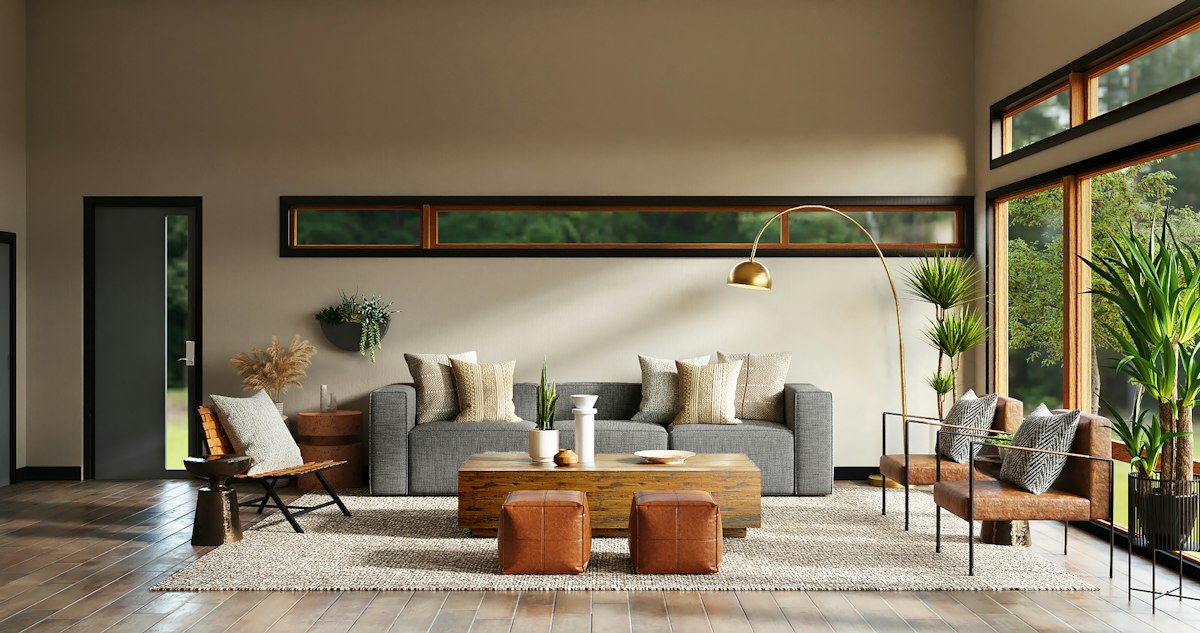
Defining the Organic Modern Sensibility
In recent years, residential design shifted away from sterile, sharp-edged minimalism in favor of spaces that foster grounding comfort. Organic modern interior design has emerged as the definitive answer to this collective yearning. It takes the simplicity, decluttered sightlines, and functional purity of modernism and infuses them with the organic soul of the natural world.
Rather than feeling cold or showroom-stiff, an organic modern home feels like a calm sanctuary. Every piece tells a story through grain, imperfection, and tactile depth.
The Art of Textural Layering
When color palettes are kept neutral, texture becomes the primary vehicle for visual richness and dimensional interest. Without bold contrasting patterns, a flat beige room can feel lifeless; however, when you pair honed limestone with brushed linen and rustic reclaimed timber, the space comes alive.
| Design Element | Organic Material | Atmospheric Impact |
|---|---|---|
| Main Seating | Slub linen or textured wool boucl? | Inviting, soft, highly tactile tactile comfort |
| Coffee & Accent Tables | Honed Roman travertine or fluted oak | Grounding architectural weight and organic patina |
| Lighting Elements | Cast plaster, washi paper, brushed brass | Soft diffused luminescence and sculptural silhouettes |
Harmonizing Architectural Scale and Proportion
Achieving organic modern balance requires resisting the urge to over-furnish. Embrace generous negative space around furniture groupings. Allow a single low-slung sofa and two sculptural lounge chairs to anchor a room, punctuated by an oversized potted fiddle-leaf fig or an olive tree in an aged terracotta urn.
Homeowner Pro-Tip:
When curating neutral tones, adhere to the 60-30-10 rule: 60% dominant warm neutral (such as soft plaster or chalky cream on walls), 30% secondary tactile tone (warm oak or biscuit upholstery), and 10% contrasting grounding accent (blackened steel or dark walnut).
The Bottom Line on Organic Modern Living
Organic modern design is timeless because it is rooted in biological connection to the earth. By curating natural noble materials, soft neutral tones, and breathable layouts, you create an enduring home that nourishes peace of mind.